#Sustainability
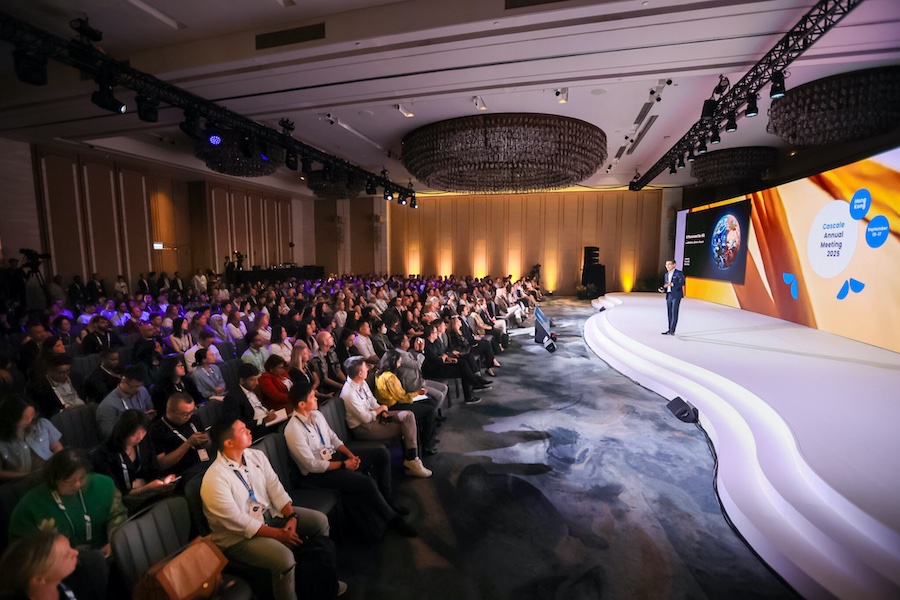
Cascale Forum: Colombo convenes 500+ manufacturers brands, and stakeholders to advance capacity building and collaboration across the consumer goods industry
“At Cascale Forum: Colombo, we are bringing the value chain together to work intentionally on the systems, relationships, and practices that accelerate measurable progress on climate and decent work,” said Harsh Saini, interim CEO, Cascale. “This is a space for shared learning — and shared responsibility.”
Rotated annually across critical manufacturing regions, Cascale Forums are brought to the industry by the stewards of the Higg Index, exclusively available on Worldly, and center the experience and expertise of manufacturers and sourcing companies at the center of global production. The Joint Apparel Association Forum (JAAF), which represents Sri Lanka’s textile and apparel export sector, is the event’s Association Collaborator. Hosting the Forum in Sri Lanka reinforces Cascale’s commitment to ensuring regional priorities shape global strategies while emphasizing that intentional collaboration is essential to drive measurable improvement on climate and decent work.
“Sri Lanka has long played an important role in advancing responsible manufacturing,” said Saifuddin Jafferjee, chairman of the Joint Apparel Association Forum Sri Lanka (JAAF). “Cascale Forum: Colombo provides a valuable platform to share regional experience, strengthen collaboration across the value chain, and contribute practical insights that support a fairer, more resilient industry.”
Across two days of plenaries, workshops, and training sessions, participants will explore what effective brand–manufacturer collaboration looks like in practice, engage in hands-on learning, and gain a deeper understanding of how to effectively use Cascale’s tools, including those in the Higg Index and Better Buying. New this year, side meetings and factory tours will offer additional opportunities to learn from regional examples of operational and sustainability excellence.
Why Sri Lanka?
Sri Lanka represents an important region in the global apparel supply chain and brings diverse perspectives to the table. Its manufacturers have earned a reputation for high environmental and social standards, energy-efficient operations, and early adoption of sustainability tools such as the Higg Index. The textile and apparel export sector accounts for nearly 50 percent of Sri Lanka’s exports and represents six percent of its GDP.
With a well-connected network of industry players who actively engage in shared initiatives, Sri Lanka offers real-world examples of responsible production – making it an ideal location for hands-on learning, cross-industry dialogue, and peer-to-peer capability building. Finally, local organizations provide valuable context through factory tours, coordinated through the Cascale Forum: Colombo program, which allow participants to experience sustainability innovations, workforce practices, and environmental performance improvements firsthand.
Member-driven Program Advisory Group
Cascale’s expert Program Advisory Group members emphasized the importance of grounding global strategy in local realities while helping develop the program for Cascale Forum: Colombo.
“South Asia is known in the global apparel industry for combining innovation, quality, and responsible manufacturing,” said Nikhil Hirdaramani, director, Hirdaramani. “Cascale Forum: Colombo showcases how that leadership contributes meaningfully to global industry progress.”
“Manufacturers are navigating increasing complexity and at MAS we have always tried to be proactive and take the challenge head on,” said Dhanujie Jayapala, general manager of environmental sustainability, MAS Holdings. “Cascale Forum: Colombo gives us the opportunity to share regional insights and build capabilities that support long-term, aligned progress.”
“To build a resilient supply chain, we need strong alignment between brands and suppliers,” said Cesar Hasibuan, responsible supply chain director, South Asia, Nike Inc. “This Forum will create space to understand each other’s challenges and design solutions that work in practice, not just on paper.”
“We need practical, operational pathways to meet today’s climate and social expectations in the fashion industry,” said Dr. Thiwanka De Fonseka, chief sustainability officer at Komar. “Cascale Forum: Colombo plays a vital role by creating a space for hands-on learning and intentional, equitable collaboration that empowers our industry to move from commitment to real, measurable impact throughout the value chain.”
“Collaboration is essential to scaling credible environmental solutions,” said Maria Arroyo, Sector Partnership Lead, ZDHC. “Our work only succeeds when data, standards, and implementation are connected — and Cascale Forum: Colombo helps make that possible.”
Program Highlights
Lead sponsored by Worldly and sponsored by MAS Holdings, Komar, TÜV Rheinland, GSCS, among others, key highlights for Cascale Forum: Colombo include:
- 500+ attendees from across the consumer goods value chain
- Two days of impact across plenaries, workshops, and practical training
- One unified mission to strengthen a fairer, more resilient industry
- Field trips and side meetings on March 30
- Intentional networking and social events
- In-person participation only; no virtual access
“Cascale Forum: Colombo brings the industry together at the point where data, capability, and action intersect,” said Scott Raskin, CEO of Worldly. “By pairing Cascale’s standards and governance with accessible, innovative solutions, the Forum helps brands and manufacturers move beyond reporting and toward decisions that improve environmental and social performance across the value chain.”
In November, after over a million people were displaced by severe flooding and landslides, Sri Lanka declared a state of emergency; Cascale is contributing to the Sri Lanka Red Cross Society to support emergency response and long-term rebuilding, and continues to stay in close contact with regional partners as needs evolve.