[pageLogInLogOut]

#Research & Development

Fraunhofer IAP paves the way for "Green" carbon fibers
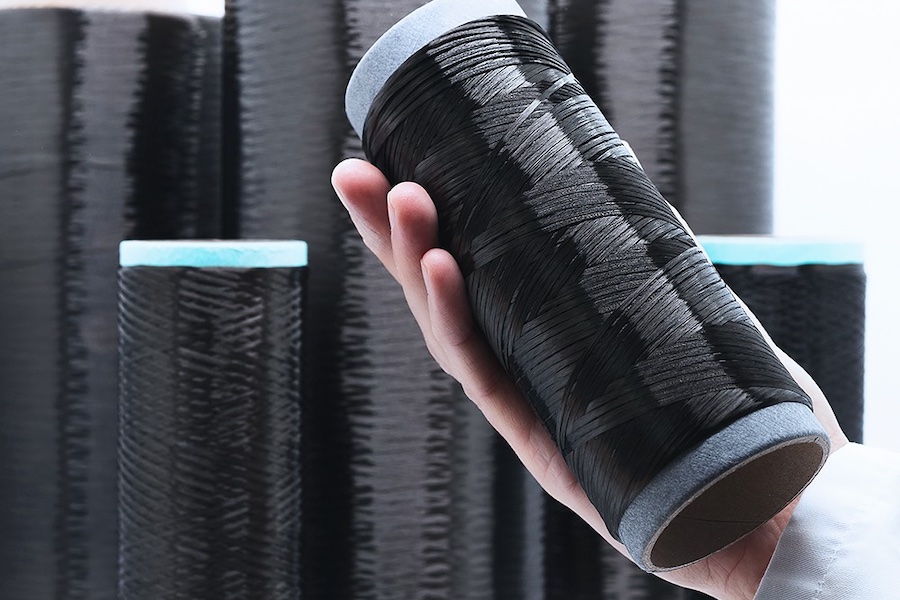
As part of the Carbon Lab Factory Lausitz, a pilot plant for the production of sustainable, cost-effective, and competitive carbon fibers will be established at the Guben site. © Fraunhofer IAP / Kristin Stein
A new pilot plant in Guben is set to enable the production of bio-based carbon fibers. The plant is part of the Carbon Lab Factory Lausitz and will make an important contribution to the transformation of the Lausitz region—from a traditionally raw material- and basic industry-oriented region to a hub for innovative high-performance materials. The German federal government and the state of Brandenburg are providing the Fraunhofer Institute for Applied Polymer Research IAP with 53.3 million euros for this purpose.

Carbon fibers are high-performance materials that combine lightness with high strength and stiffness. They are particularly in demand in lightweight construction, which is a key factor for developing efficient and resource-saving materials for future industries. The lighter cars, airplanes, wind turbines, or bicycles are, the more energy-efficiently they can be operated. Carbon fibers are also increasingly important for energy generation, conversion, and storage, for example in batteries, fuel cells, or other components of modern energy systems.

Conventional carbon fibers are predominantly produced from fossil raw materials. To expand the raw material base with sustainable alternatives, bio-based carbon fibers are gaining increasing attention. They conserve resources, have a better CO2 balance, and make the value chain more resilient. In addition, their properties can be specifically tailored to different applications. The industry already shows strong demand for such alternatives.

Concentrated expertise in bio-based carbon fibers

The production of bio-based carbon fibers is a specialty of Fraunhofer IAP: In a first step, raw materials such as cellulose or lignin from wood are dissolved and spun into precursor fibers. These are then converted into carbon fibers through carbonization.

To scale these processes for industrial applications, a pilot plant will be established in Guben as part of the Carbon Lab Factory Lausitz. The project is financed with 53.3 million euros by the Brandenburg Ministry of Science, Research, and Culture through Wirtschaftsregion Lausitz GmbH (WRL) and the federal government. The positive decision on funding by the Interministerial Working Group (IMAG) on March 12, 2026, marks an important milestone for implementation. The city of Guben is investing around 20 million euros in the construction of the building in the Guben Industrial Park. Fraunhofer IAP will use the remaining funds for plant technology, equipment, and initial setup. The plant is expected to start operation at the end of 2029.

Dr. André Lehmann, Head of the Polymer Processing Research Division and Fiber Technologies Department at Fraunhofer IAP, explains: "With the Carbon Lab Factory Lausitz in Guben, we are creating the conditions for a research and pilot infrastructure where various innovative precursor fibers can be produced up to the ton scale."

Dr. Jens Erdmann, Head of the Polymer Engineering Division at Fraunhofer IAP, adds: "We are also establishing a laboratory-scale carbonization facility that converts the new precursor fibers into carbon fibers at the kilogram scale. This allows us to efficiently evaluate process behavior and potential, optimize the processes, and gather valuable insights for larger scales. We can also provide industry with sample quantities for testing."

In close cooperation with partners in the Lausitz, Fraunhofer IAP is further developing precursor and carbon fibers for various lightweight and energy applications, thereby strengthening the transfer to industrial use.

Carbon Lab Factory Lausitz—Pioneering cross-state collaboration complementing

Fraunhofer IAP's initiative, a pilot plant for ton-scale carbon fiber production is being established in the Saxon Lausitz. Operated by the Technical University of Chemnitz, this plant can process both conventional and Fraunhofer IAP-provided precursor fibers. In cooperation with the Institute for Lightweight Design and Value Chain Management at Brandenburg University of Technology (BTU) Cottbus-Senftenberg, carbon fiber-reinforced composite materials are tailored for diverse lightweight applications. Together with regional companies, the partners test demonstrators and prototypes under real-world conditions. This accelerates the transfer of research results into industrial applications and strengthens the region as a hub for high-performance materials.

The Carbon Lab Factory Lausitz is embedded in the Lausitz research infrastructure, where the Lausitz Science Park will serve as a future hub for joint initiatives with local innovation drivers, for example.

"By combining the expertise of the participating institutions, the Carbon Lab Factory Lausitz creates a globally unique complete value chain in the region and beyond, ranging from renewable raw materials to components for lightweight applications," says Professor Böker, Director of Fraunhofer IAP, who initiated the Carbon Lab Factory Lausitz together with Professor Kroll from the Technical University of Chemnitz. The cross-state cooperation is considered a flagship project for sustainably produced carbon fibers.
More News from Fraunhofer Institute for Applied Polymer Research (IAP)

#Research & Development

Sustainable design of Geosynthetics and roof underlayments made from recyclates

Is it possible to recover plastic recyclates from previously unused waste streams in order to produce high-quality fibers and films? How can bio-based polymer fibers be manufactured so as to allow adjustable biodegradability? These are the questions being addressed by researchers from the Fraunhofer Cluster of Excellence Circular Plastics Economy CCPE in the Zirk-Tex project.

#Research & Development

Feasibility study shows potential to convert textile waste into PHB bioplastic

Textile waste could serve as a valuable source of raw materials for sustainable plastics in the future, according to the joint TexPHB feasibility study conducted by the Fraunhofer Institute for Applied Polymer Research IAP, Beneficial Design Institute GmbH and matterr GmbH. The study will be presented to the public for the first time at a network meeting on 25 November 2025 at the State Chancellery in Potsdam.

#Recycling / Circular Economy

Closing the Loop in the Textile Industry: Value Creation in the State of Brandenburg

How can the state of Brandenburg benefit from a circular textile industry? This question is addressed in the new policy paper "Closing the loop in the textile industry: Value creation in the state of Brandenburg." Based on the „TexPHB“ feasibility study funded by the Brandenburg Ministry of Climate Protection, it shows how textile waste can be integrated into new value chains.

#Research & Development

Better, faster, bio-based: Functional new Plastic alternatives

How can new bio-based and biohybrid materials with improved features be developed faster? Six Fraunhofer institutes are jointly exploring this question in the SUBI²MA flagship project, using an innovative bio-based polyamide developed by Fraunhofer researchers as a model. Its specific properties make it a promising alternative to fossil-based plastics.

More News on Research & Development

#Research & Development

Textile climate control system in workwear – exhibition at the 2026 SME Innovation Day!

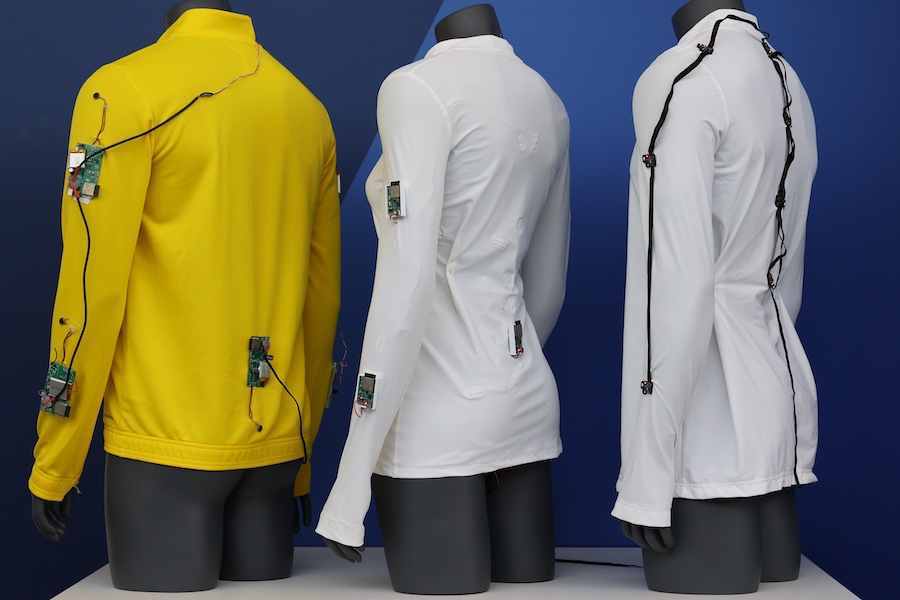
Conventional protective workwear often reaches its limits during strenuous physical activity. In particular, the transport of sweat and excess body heat poses a problem. The German Institutes of Textile and Fiber Research (DITF) conducted research on flow-optimized, air-conducting textile structures that enable targeted climate control directly on the body. These structures can be integrated straight into protective work garments. The textile climate control system supports the body’s natural thermoregulation. This contributes to improved workplace safety and comfort.

#Research & Development

Elastic yarns to become more recyclable and environmentally friendly in future

On 29 April 2026, ITA student Tobias Dickmeiß was awarded a sponsorship prize by the Wilhelm Lorch-Stiftung for his innovative approach, to replacing conventional elastane with elastic yarns made from thermoplastic copolyester elastomers (TPC). Thanks to their thermoplastic nature and compatibility with typical polyesters used in the textile industry, elastic TPC yarns offer improved recyclability. Furthermore, the use of the melt-spinning process in yarn production eliminates the need for solvents that are harmful to the environment and human health.

#Research & Development

Walter Reiners Foundation Prize awarded to three ITA graduates

Sabina Dann, Lukas Balon and Annegret Storm from the Institut für Textiltechnik (ITA) of RWTH Aachen University were awarded the Walter Reiners Foundation Prize by the German Engineering Federation (VDMA) for their master’s and bachelor’s theses. Peter Dornier, Chairman of the Walter Reiners Foundation, presented the awards during Techtextil at the VDMA stand in Frankfurt am Main, Germany.

#Techtextil 2026

Young talents honoured – 60 years Walter Reiners Foundation

At the Techtextil trade fair in Frankfurt at the end of April, Peter D. Dornier, chairman of the VDMA’s Walter Reiners Foundation, presented awards to five successful young engineers. Promotion and sustainability awards were presented in the categories of bachelor’s/project theses and diploma/master’s theses. Academic theses are eligible for the sustainability awards if, for example, they develop solutions for resource-efficient products and technologies.

Latest News

#INDEX 2026

“We clearly see that reliability, flexibility, service and total cost of ownership are becoming increasingly important again.”

The nonwovens industry continues to face a challenging market environment. Nevertheless, AUTEFA Solutions reports successful projects, new line sales and growing demand for energy-efficient and flexible solutions. In this interview, André Imhof of AUTEFA Solutions talks about competitiveness against Chinese suppliers, new service and recycling concepts, the growing importance of application development and the opportunities created by countercyclical investments.

#INDEX 2026

“Needle punching technology is more universal and sustainable than ever!”

Needle punching technology was long regarded as a rather traditional and comparatively slow technology within the nonwovens industry. In this interview, Johann Philipp Dilo explains why needle punching is more relevant than ever today – ranging from energy efficiency and resource conservation to hygiene applications, new machine concepts and design-oriented nonwoven solutions.

#Nonwovens

PET spunbond from China – EDANA welcomes imposition of provisional anti-dumping measures

On 13 May 2026, after eight months of investigation, the European Commission imposed provisional anti-dumping duties of 45.6-50.0% on imports of PET spunbond from China. EDANA welcomes this expression of the Commission’s clear determination to protect EU industries from the unfair trade practices of Chinese producers.

#INDEX 2026

ANDRITZ at INDEX ’26: Driving sustainability with next-generation nonwoven technologies

From May 19-22, ANDRITZ Nonwoven & Textile is presenting its innovative solutions for the nonwoven & textile industry in Geneva, Switzerland. ANDRITZ will focus on technologies for sustainable and durable nonwovens, converting, sustainable fiber processes, textile recycling, and life-cycle services on booth 2114 in hall 02.

TOP