[pageLogInLogOut]

#Recycling / Circular Economy

EU Research Project

European research project addresses textile waste through integrated recycling technologies
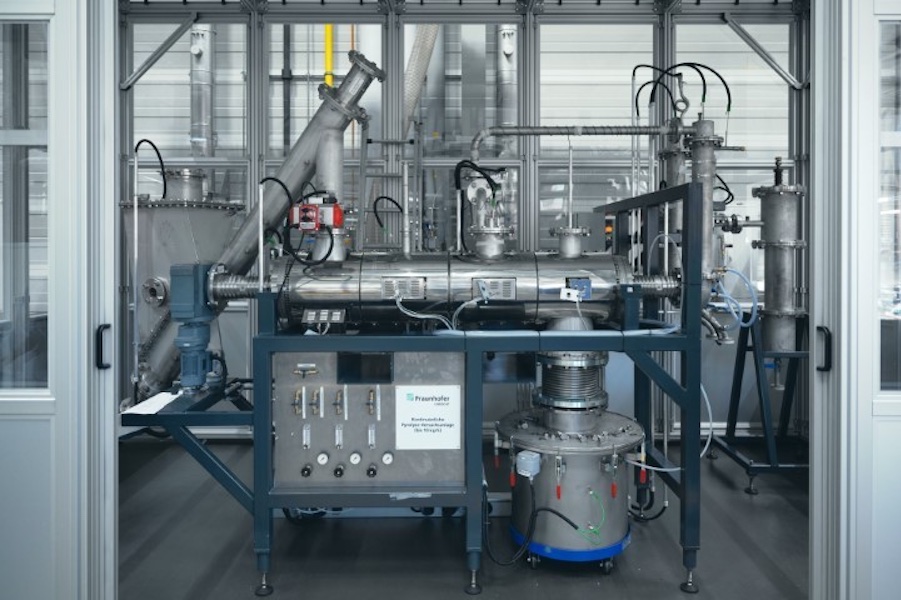
Pyrolysis research reactor for the chemical recycling of plastic-containing textiles at Fraunhofer UMSICHT in Sulzbach-Rosenberg
A major European research initiative coordinated by Fraunhofer UMSICHT has been launched to develop integrated solutions for textile waste recycling. The AUTOLOOP project aims to create a comprehensive system that could process 1.24 million tonnes of textile waste annually by 2050, whilst potentially creating over 130,000 green jobs across the EU. This project aims to develop, test and integrate automated sorting, tracing, and closed-loop recycling technologies for polyester-based textiles (NRT), addressing the pressing challenge of textile waste management.


Europe's textile and clothing industry employs 1.3 million people and generates around 170 billion EUR annually. However, it produces 10.9 million tonnes of post-consumer textile waste each year, with less than 1% currently recycled through closed-loop processes back into new textiles.

»The textile industry is at a critical juncture,« explains Dr. Thomas Fehn, Coordinator of AUTOLOOP from Fraunhofer UMSICHT. »This project represents a paradigm shift from waste to resource, transforming discarded clothing into valuable raw materials for new garments.«
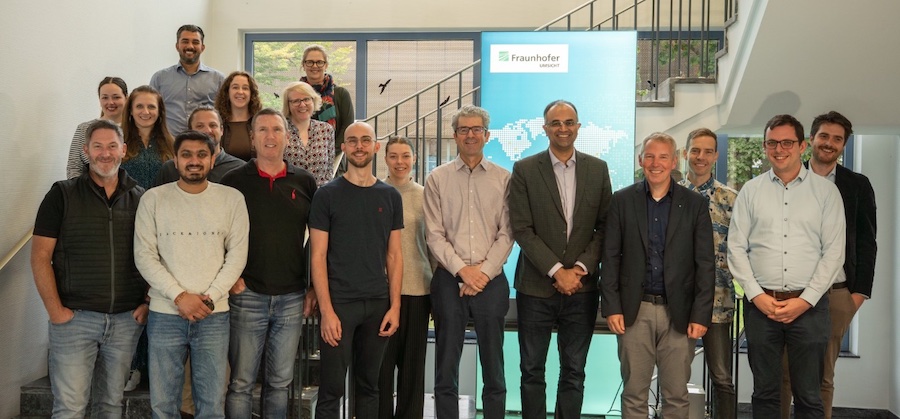
The project partners of the Autoloop Project at the kick-off meeting in Oct 2025 at Fraunhofer UMSICHT in Sulzbach-Rosenberg © 2025 Fraunhofer UMSCHAU


Technological approaches and work packages

AUTOLOOP comprises several key technological innovations for the complete recycling of polyester-based (PET-based) textiles, which are being further developed and validated by the project partners:

  • AI-Powered Sorting: ZORITEX's artificial intelligence system identifies over 15 different fibre types and their blends using hyperspectral near-infrared technology. This automated approach could increase sorting throughput tenfold whilst reducing costs by 50-75%
  • Chemical-Free Recycling: AALTO's Ioncell® process uses innovative ionic liquid solvents to extract cellulose fibres from textile blends, achieving over 95% recycling rates without harmful chemicals.
  • Advanced Synthetic Recovery: The ReSyn technology developed by Fraunhofer UMSICHT and SKZ breaks down synthetic fibres into high-purity building blocks for creating new materials, working efficiently even with contaminated textiles.
  • Smart Fibre Tracking: TLX's IntegriTEX® technology embeds invisible identifiers in fibres, enabling contactless detection and complete supply chain transparency.
  • Digital Integration: TEXROAD's cloud-based Data Hub standardises information management across the entire recycling process, ensuring compliance with emerging regulations like the Digital Product Passport.

Projected outcomes by 2050

If successfully scaled, AUTOLOOP's integrated approach could:

  • Recycle 1.24 million tonnes of textile waste annually
  • Achieve 96% material recovery rates
  • Create over 130,000 new green jobs across the EU
  • Reduce municipal waste management costs (currently 60-110 EUR per tonne)
  • Significantly decrease the textile industry's reliance on virgin materials
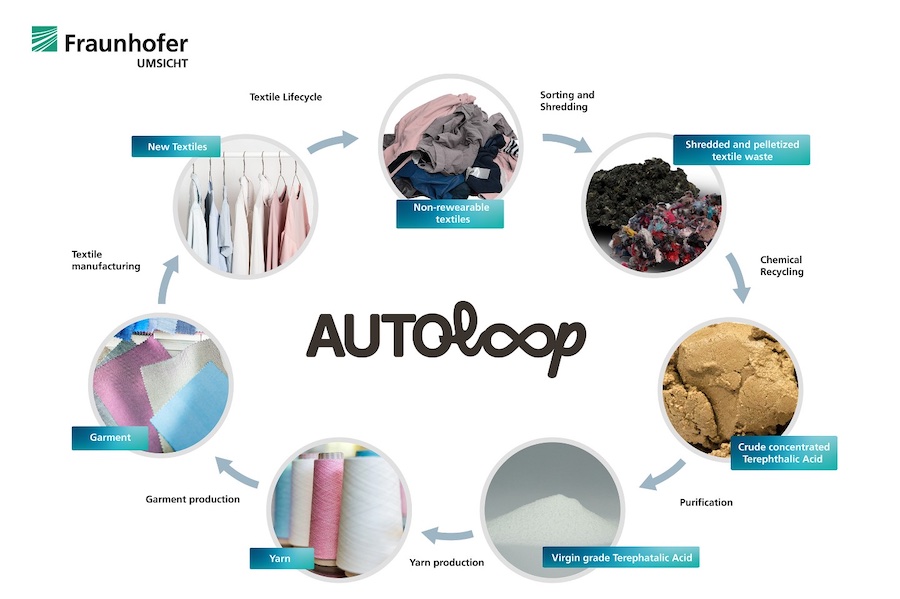
The chemical recycling of synthetic fibres (PET) into new basic chemicals is a technological building block being researched in the AUTOLOOP project © 2025 Fraunhofer UMSCHAU


A truly European effort

The project brings together 14 partners from seven countries, combining research institutions with industrial partners. Key organisations include ZORITEX (UK), AALTO University (Finland), Fraunhofer UMSICHT (Germany), TLX (Germany), and TEXROAD (Netherlands), along with additional partners across Europe. Additional partners include, ELT (UK), TRASBORG (Denmark), VTT (Finland), SKZ (Germany), S4L (UK), LEEDS (UK), NORION (Denmark), TEMASOL (Switzerland), and LGI (France). 

Looking ahead

As European regulations on waste management continue to develop and demand for sustainable textiles grows, AUTOLOOP provides a research foundation for advancing circular economy principles within the textile industry. The project demonstrates how advanced recycling technologies can be integrated to create efficient systems for processing textile waste, supporting the transition from linear to circular production models. AUTOLOOP has received funding from the European Union's Horizon2020 research & innovation programme under grant agreement No 101181624.
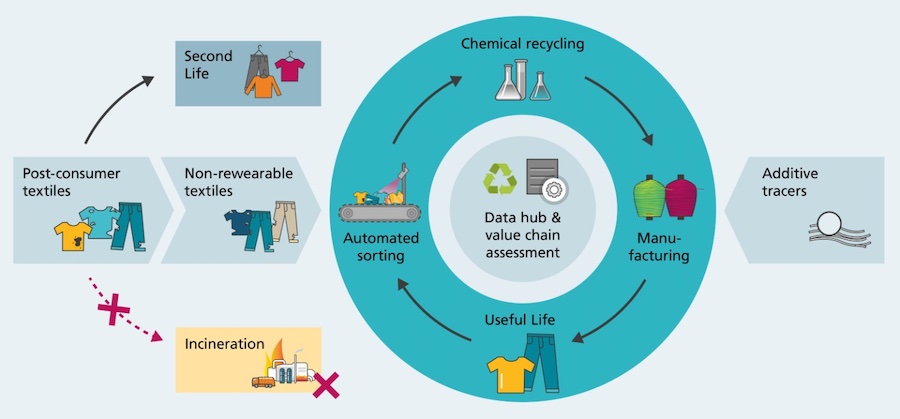
AUTOLOOP integrates technologies for sorting, tracking, recycling and reusing (second life) textiles in one system to avoid incineration © 2025 Fraunhofer UMSCHAU


More News from Fraunhofer UMSICHT Institute Branch Sulzbach-Rosenberg

More News on Recycling / Circular Economy

#Recycling / Circular Economy

Reju secures €135 Million in Dutch NIKI Funding for industrial-scale textile-to-textile regeneration hub at Chemelot Industrial Park, the Netherlands

Reju™, the progressive textile-to-textile regeneration company, has been awarded €135 million in funding under the Netherlands’ Nationale Investeringsregeling Klimaatprojecten Industrie (NIKI) program. The funding will support Reju’s planned industrial-scale Regeneration Hub at Chemelot Industrial Park in Sittard-Geleen, covering both the investment phase and ongoing operations, and represents a critical milestone on the path toward final investment decision.

#Recycling / Circular Economy

eeden is now a Canopy partner

eeden is committed to enable circular textiles by developing recycling technologies that turn textile waste into valuable raw materials. But the commitment goes further – eeden advocates for supply chain solutions that uphold responsible environmental and ethical standards, protecting global ecosystems including Ancient and Endangered Forests.

#Recycling / Circular Economy

Infinited Fiber Company’s environmental permit for Kemi advances to statutory appeal phase

Infinited Fiber has reached an important regulatory milestone in Finland, as the environmental permit process for a potential facility in Kemi has progressed to the statutory appeal phase.

#Recycling / Circular Economy

Carbios confirms Longlaville plant in France following financing progress

Carbios has reaffirmed its plans to build its Longlaville plant in France within a project financing framework, targeting the start of production in the first half of 2028. The company also reports a solid cash position of around €60 million at the end of 2025 and has appointed Benoît Grenot as Deputy Chief Executive Officer to support the execution of its strategic projects.

Latest News

#Raw Materials

New study shows low environmental impact by Cotton made in Africa Organic Cotton from Tanzania

Today, the Aid by Trade Foundation (AbTF) is announcing the results of a comprehensive life-cycle analysis (LCA) for cotton produced in Tanzania under the Cotton made in Africa Organic (CmiA Organic) standard. The study emphasises the small ecological footprint of CmiA Organic verified cotton. This can largely be traced back to the absence of synthetic pesticides, artificial fertilisers, and artificial irrigation. Consequently, CmiA Organic cotton can help the textile industry meet regulatory requirements as well as science-based targets. The results also show that the consequences of climate change threaten the livelihoods of these cotton farmers, even though the type of agriculture they practise barely contributes to climate change.

#Raw Materials

Better Cotton Initiative strengthens regenerative focus in standard update

The Better Cotton Initiative (BCI) has strengthened the regenerative focus of its field-level standard with the launch of a new version of its Principles & Criteria (P&C), which marks the next step in the organisation’s journey to becoming a regenerative standards system.

#Man-Made Fibers

Selenis and Kintra Fibers partner to scale 100% bio-based synthetic fiber technology

Selenis, a leading global specialty polyester manufacturer, today announced a strategic manufacturing partnership with materials science company Kintra Fibers to scale Kintra’s patented fiber-grade PBS resin - a 100% bio-based and biodegradable material designed for textile applications.

#Functional Fabrics

PERFORMANCE DAYS proves its relevance as the industry’s key meeting point

Held on March 18–19, 2026, PERFORMANCE DAYS once again confirmed its position as a leading international platform for functional textiles. A total of 3.366 trade visitors and around 560 exhibitors gathered in Munich, with the event already kicking off successfully on DAY 0, which received highly positive feedback for its interactive format. Despite challenging conditions caused by the public transport strike in Munich, the event saw strong attendance and a consistently high level of activity across both exhibition days.

TOP