#Recycling / Circular Economy
Europe’s first polyester textile recycling system realised with PURE LOOP’s ISEC evo

The UK produces more than half a million tonnes of polyester textile waste every year. Project Re:Claim aims to recycle post-industrial and post-consumer clothing and textiles. The focus is on the recycling of post-industrial polyester from contract textiles for hospitals or hotels (e.g. bed and table linen), workwear and school uniforms, as well as promotional banners (e.g. printed sports banners). The fabrics and textiles come from controlled material streams (closed-loop systems), ensuring minimal impurities. The recycling technology used is an ISEC evo 302 E from PURE LOOP. This innovative technology, developed by the EREMA Group’s member, enables efficient production of high-quality rPET from textile waste.
Europe’s first polyester textile recycling system
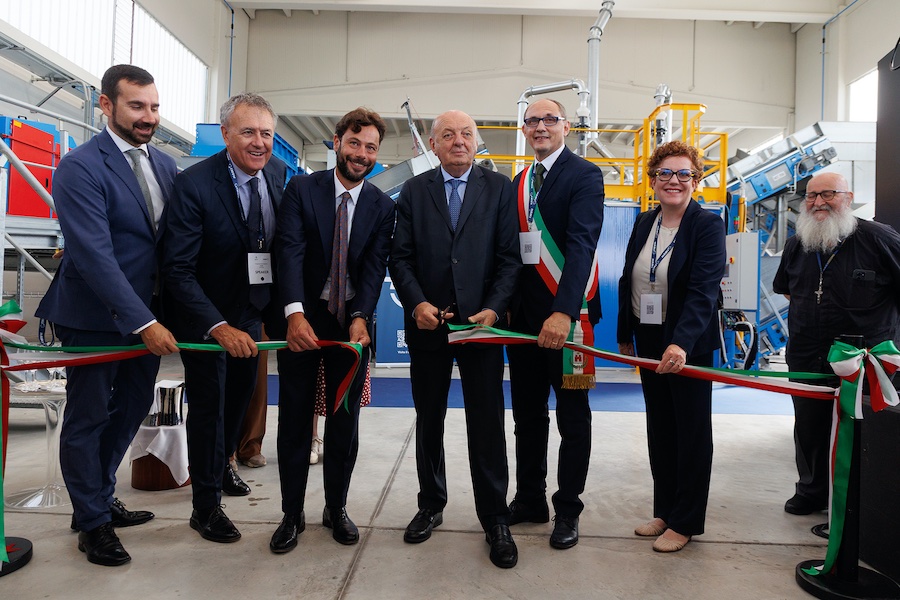
The plant, installed at a Salvation Army Trading Company (SATCoL) processing centre in Kettering in early 2024, represents Europe’s first commercial scale polyester textile recycling system specialising in post-consumer polyester. SATCoL is the trading arm of The Salvation Army and UK’s largest charity owned textile collector.
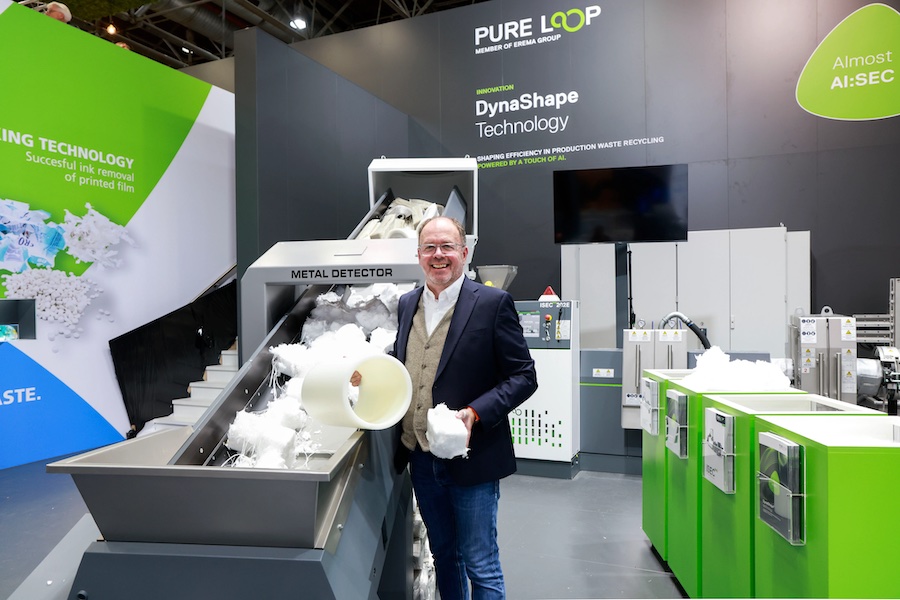
Together with Project Plan B, a specialist in garment design with a focus on design for recycling, PURE LOOP optimised its integrated shredder-extruder combination ISEC evo for the specific requirements. "Plan B has a vision, and we are convinced something great can come out of it," emphasises Manfred Dobersberger, Managing Director at PURE LOOP. Thanks to the configuration of shredder and extruder on one drive shaft and the patented double feed ram system, the ISEC evo 302 E gently processes discarded polyester into rPET, which can be reused for new yarns and other products. "Up until now, polyester that had no useful life left would have been disposed of," explains Tim Cross, CEO of Project Plan B. "With the ISEC evo, we can now return textile waste as a valuable material back to the supply chains. It’s a carbon saving solution, and it plays a significant role in helping our collective journey to Net Zero."

Textile recycling: an industry with growth potential
The plant aims to recycle 2,500 tonnes of polyester in its first year, doubling this amount in the second year. In addition to the environmental benefits such as diverting unwearable textiles away from landfill, initial estimates indicate that the production of pellets from Project Re:Claim uses only one-tenth of the energy compared with pellets produced from virgin polyester. One prerequisite for this is an energy-efficient recycling machine such as the ISEC evo.
The recycling of post-consumer and post-industrial textiles presents immense potential for the circular economy, according to Dobersberger: "It is evident to me that textile recycling will become a fundamental aspect of the industry’s future. Design for recyclability is the key to success, and pioneers like Plan B and SATCoL are essential. Our recycling system stands as a versatile material processor, particularly proficient in effectively handling fibres and textiles made from PE, PP, PA, and PET in forms such as fibre bales, ropes, filaments, textiles, and non-wovens. We are proud to be part in such pioneering projects within the textile industry as Project Re:Claim."
Recognition for shared ambitions
Project Re:Claim has been nominated for the Plastics Industry Awards 2024 in the "Recycler of the Year" category. The award ceremony will take place on 22 November in London. "We are delighted with this nomination," says Mark Richardson, Sales Manager at Eurograv Limited, who has been driving the project forward from the outset. "It underlines the innovative strength of the technology and recognises the collective efforts of all companies and individuals involved." Eurograv is the authorised representative of PURE LOOP in the UK.